
“For future generations we need to hang onto the story about how we arrived to this historical moment.” –Roger Duarte
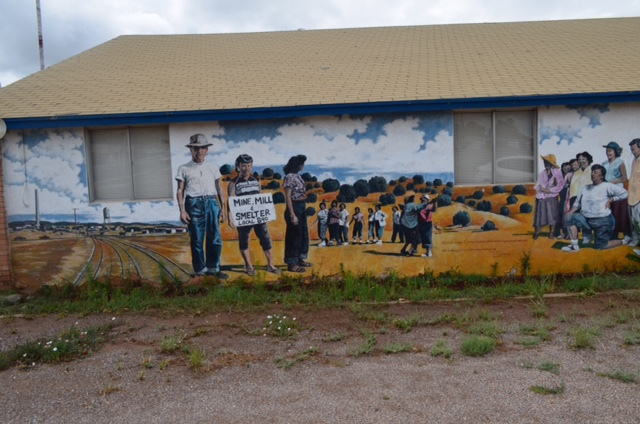
Salt of the Earth tells the story of the 1950s mining strike of the New Mexico Local 890 of the International Union of Mine, Mill, and Smelter Workers in Hanover, New Mexico. The film centers on a fictional Mexican American couple, Ramon and Esperanza Quintero, who live in Zinc Town.
The Zinc Town community is essentially run and owned by Delaware Zinc Inc. The majority of the miners are Mexican-Americans who seek equitable working conditions equal to those of the white, or “Anglo” miners. Having already planned to strike, the unionized workers initiate their plans after a deadly incident takes place in the mine. The company refuses to negotiate and the impasse continues for months which sets the story of Salt of the Earth in motion.
Salt of the Earth is regularly cited as one of the most historically and culturally significant American films of the twentieth century. For one, blacklisted Hollywood filmmakers enlisted the mining families in an alliance to tell the story of the strike, to translate their experiences into a film that effectively and realistically portrayed Mexican-American struggles and working-class life, in general, in rural New Mexico. Second, the film foregrounded the role of women’s labor in a way that would later serve useful for analyses of class and gender.
The film and strike would ultimately come to signify the complexities and challenges of ethnic, racial, class, and gender inequality both in local and national politics as well as popular culture.
You can watch the film here. You can read more about the film’s production, behind the scenes controversies, cultural relevance, and historical significance.
For more information on the nature of this teaching and learning project, please view the Mission Statement.
For local community testimonials, visit the Salt of the Earth Recovery Project digital archive.
For a recent perspective on the Empire Zinc Mine Strike from NPR Latino USA, click here.
 Salt of the Earth: A Teaching & Learning Resource